


Why Good Branding Matters for Startups
When you’re building a startup, every decision counts, from your product roadmap to your go to market plan. Yet one factor that’s often underestimated is branding. A clear, strong, and consistent brand doesn’t just make your business look polished, it builds credibility, attracts customers, and reassures investors. According to a survey by CB Insights, 70% of startups fail due to lack of market traction, and a well executed brand strategy directly influences how effectively a company gains that traction.
So why does branding matter so much, and how can early stage companies build it the right way? Let’s break it down.
Understanding Branding for Startups
Branding for startups is more than a logo, a color palette, or a tagline. It is the sum of how your company is perceived, your story, your tone of voice, your visual identity, and the promises you make and keep with your customers.
For founders and investors, good branding means:
- Trust: Customers believe you’ll deliver what you promise.
- Differentiation: You stand out from competitors in a crowded market.
- Alignment: Your mission, values, and messaging connect with the right audience.
- Scalability: A brand that grows with you instead of holding you back.
How Startup Branding Actually Works
Branding works by creating mental shortcuts in the minds of your audience. For example, when people think of Stripe, they don’t just think of payments, they think of simplicity, reliability, and innovation. That association did not happen by accident, it was intentionally designed.
Key elements of startup branding include:
- Brand Identity – logo, typography, colors, and design system.
- Brand Voice – how you communicate across channels.
- rand Story – B why you exist, who you serve, what problem you solve.
- Customer Experience – the consistency of your product, support, and touchpoints.

Why Every Startup Needs Strong Branding
For founders and early stage teams, good branding is not a luxury, it is a growth driver. Here’s why:
1. Builds Investor Confidence
Investors don’t just back products; they back stories. A compelling brand identity signals professionalism and foresight, making it easier for investors to believe in your vision.
2. Accelerates Business Growth
A strong brand drives customer acquisition. According to Edelman’s Trust Barometer, 81% of consumers need to trust a brand before buying from them. For startups, trust is often the difference between scaling and stalling.
3. Attracts Top Talent
Employees want to work for companies with a clear mission and values. Good branding communicates culture, making recruitment easier and retention stronger.
4. Creates Long-Term Differentiation
In markets where technology can be copied, brand strategy ensures your reputation and relationships remain a moat competitors can’t replicate.
Can Startup Branding Scale to Enterprise Level?
Yes. In fact, the strongest enterprise brands such as Airbnb, Slack, and Shopify started with clear and consistent early branding. What makes branding scalable is consistency. When your identity, values, and story are well defined, they can expand across products, geographies, and audiences without losing clarity.
Top Features of Strong Startup Branding

Why Every Startup Needs Strong Branding
1. Clear Mission - Stronger Storytelling
A defined mission gives your brand purpose. It helps communicate why you exist and connects your story to what your audience values.
2. Consistent Design - Recognizable Presence
Consistency in visuals, typography, and tone builds instant recognition and strengthens your identity across every touchpoint.
3. Authentic Voice – Customer Trust
A genuine voice makes your brand relatable. When your communication feels real, people believe in what you stand for.
4. Emotional Connection – Long-Term Loyalty
Great branding goes beyond function, it makes people feel something, leading to deeper loyalty and advocacy.
5. Flexible System – Scalable Across Markets
A well-structured brand system adapts easily to new audiences, platforms, and products without losing its essence.
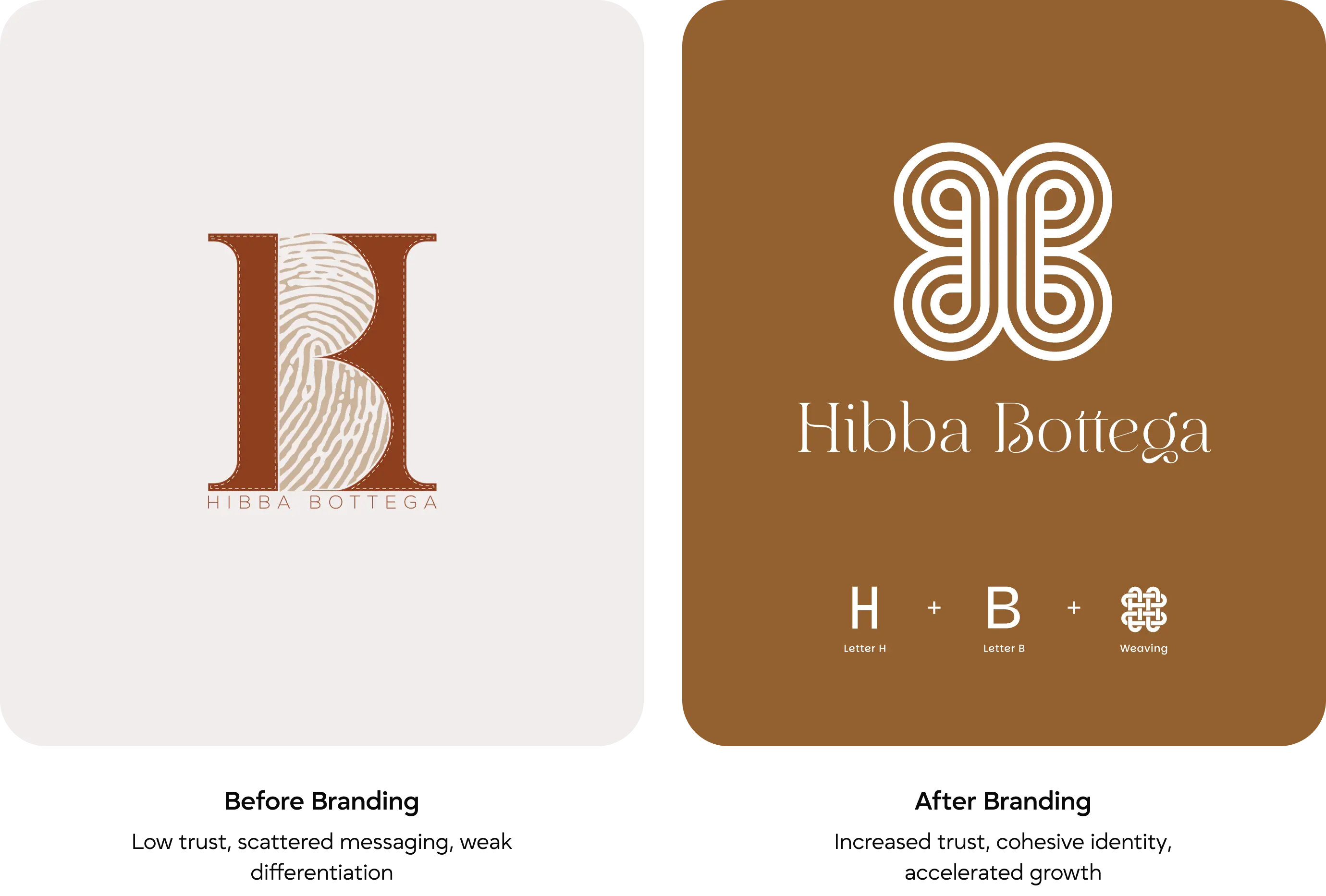
Before vs After: Branding in Action
Practical Steps for Founders
1. Define Your Brand Story Early – What problem are you solving, and why does it matter?
2. Create a Visual Identity System – Keep it simple, consistent, and adaptable.
3. Develop Brand Guidelines – Document tone, design, and messaging so every channel is aligned.
4. Prioritize Authenticity – Avoid jargon; communicate like a human to build genuine trust.
5. Invest in Feedback Loops – Test messaging with early customers and refine based on insights.
FAQs on Startup Branding
1. What are the key benefits of branding for startups?
Effective branding helps your startup build trust, attract investors, and stand out in a crowded market. A strong brand also accelerates customer acquisition, strengthens loyalty, and makes hiring talent easier by giving your company a clear identity and purpose.
2. How can I choose the right brand strategy for my startup?
Start by defining your mission, audience, and value proposition. Understand what sets you apart and express it consistently through your visuals, messaging, and customer experience. The best brand strategies are rooted in authenticity and clarity, not trends.
3. How is branding different from traditional marketing?
Branding establishes the emotional foundation of your company, it’s how people perceive and remember you. Marketing, on the other hand, drives short-term campaigns and conversions. When done together, branding strengthens the impact of every marketing effort.
4. Is branding cost-effective for startups?
Yes. While there’s an initial investment, strong branding reduces future marketing costs by increasing recognition and trust. It makes every campaign more effective and helps attract both customers and investors without relying solely on paid media.
5. Can branding benefit B2B startups?
AAbsolutely. B2B brands that communicate clearly and confidently build stronger relationships and close deals faster. A well-crafted identity signals professionalism, trustworthiness, and long-term commitment, qualities every business partner values.
How Artocea Approaches Professional Branding
At Artocea, we treat branding as the foundation of every successful business, not just a design exercise. Our process begins with understanding your vision, values, and the audience you want to reach. From there, we build a clear brand identity that translates across every touchpoint, visual design, messaging, digital experience, and customer interactions.
We have helped startups refine their story and scale their presence, whether that meant shaping a bold visual identity, creating investor ready pitch materials, or designing digital products that feel consistent and trustworthy. What sets our work apart is the balance of creativity and strategy. Every decision is intentional, designed to build trust and long term growth.
If you want your startup to stand out with branding that not only looks good but also works hard for your business, Artocea is here to help. Start a conversation with us.
Conclusion
Strong branding for startups is not just about design, it’s about identity, trust, and long term growth. Founders and investors who prioritize brand identity and brand strategy early on set their companies up for sustained business growth. Whether you’re raising funding, acquiring your first customers, or scaling globally, your brand is the silent engine driving momentum.

DESIGN STORIES
At Artocea, every project goes beyond visuals, becoming a story shaped through design. We craft experiences that truly connect, whether it’s an app, a brand, or an animation.
Our creative team blends clarity, detail, and personality to craft work that stands out and leaves a lasting impression.